

Business Card Etiquette: When to Hand It Over (And When Not To)
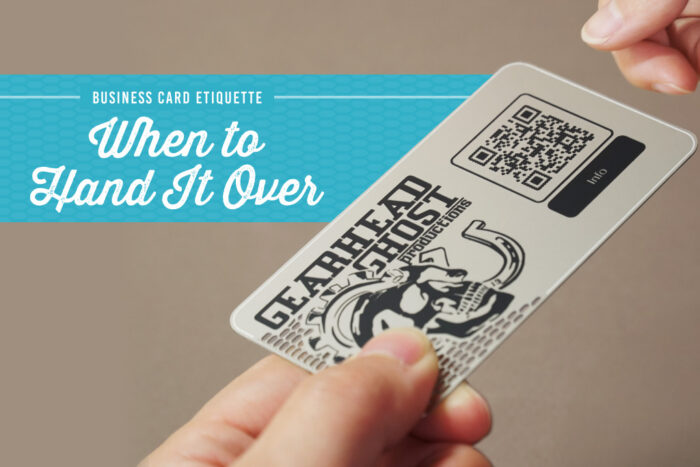
There was a time when networking was simple: shake hands, swap paper cards, follow up… maybe. Then the first “upgrades” arrived – premium stocks, spot gloss, letterpress – and suddenly a business card wasn’t just contact info. It was a signal.
Then metal business cards changed the standard again. They didn’t just look different, they felt different. The weight, the edge, the unmistakable clink when it hits the table. In a world full of forgettable exchanges, metal made introductions memorable – and memorable doesn’t get tossed.
Now we’re in the next shift: digital business cards, QR codes, instant contact sharing. It’s fast. It’s exciting. But here’s the real question: does it last?
Because speed is great, until you’re just another name saved in someone’s phone. Another contact they scroll past later and think, “Wait… who’s Kevin?”
The best business card etiquette today involves knowing when to hand over something physical while understanding the importance of business card etiquette in our digital age.
Why handing over a card still matters (even in a digital world)
Incorporating business card etiquette into your networking strategy can lead to more meaningful connections.
Mastering business card etiquette can set you apart in your professional journey.
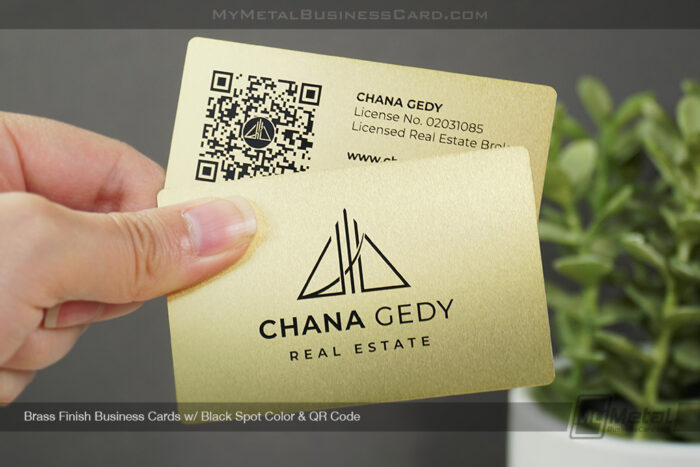
Understanding proper business card etiquette can greatly enhance your networking opportunities.
A digital exchange is efficient. A physical exchange is emotional.
When you give someone a card, you’re creating a tiny, memorable moment:
- A brief pause in the conversation
- A gesture of confidence
- A physical reminder that you showed up with intention
That’s why business card etiquette still matters. It’s not about tradition — it’s about being remembered.
And it’s also why metal business cards have become the modern standard for people who refuse to be forgettable. They’re premium without being stiff. Bold without being loud. And they instantly elevate how you show up.
The modern dilemma: “If I can scan it, do I even need to hand it?”
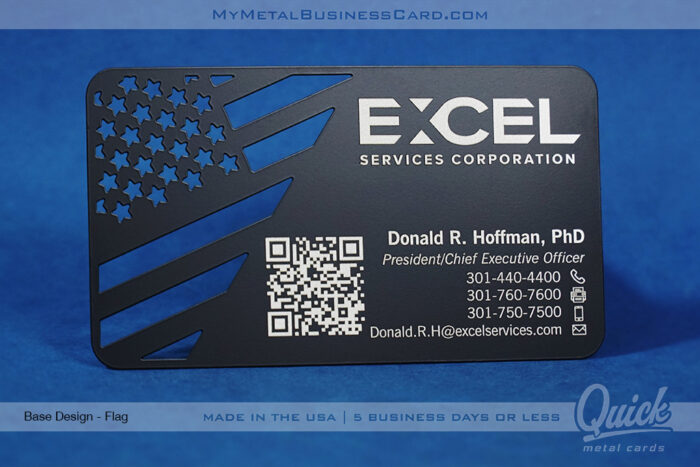
QR codes changed the game. With a quick scan, someone can:
- Open your website
- Save your info instantly
- Pull up a digital contact card
- Follow your socials in seconds
That’s real value, and the best part is people already know what a QR code is. No explaining. No awkward “What do I do?” moment. Just scan and go.
The problem isn’t digital – it’s digital-only.
If the entire interaction is a quick scan and a new contact saved, you still risk becoming another random name later. Another “Who’s Kevin?” scroll.
So yes, QR codes make sharing easy.
But without the handoff, you lose the physical anchor that helps people remember you.
The real solution: hand out QR code cards like you would any stack
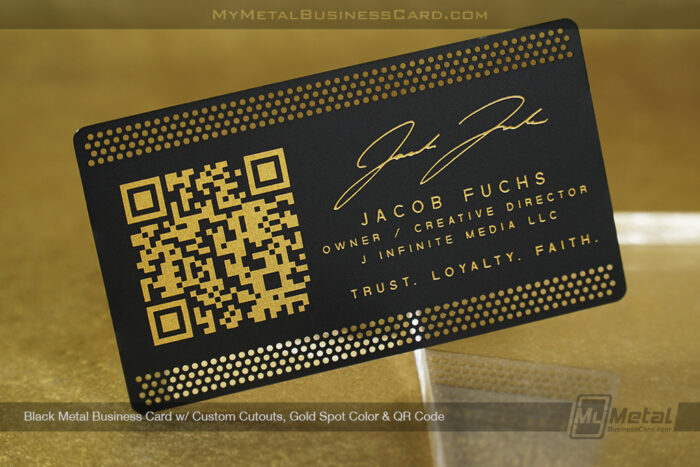
Here’s the move that actually works:
Order metal QR code cards the same way you’d order traditional cards – by the stack – and hand them out.
Why it wins:
- You give a physical takeaway people keep
- You make connecting effortless (scan → instant access)
- You create a real moment (handoff + conversation)
- You’re memorable now and easy to find later
Plus, QR is a smart upgrade: we can create a custom QR code and add it to your product for $15, so you get modern functionality without extra complexity.
That’s modern etiquette done right: evolved, not trendy.
QR codes aren’t just for business cards
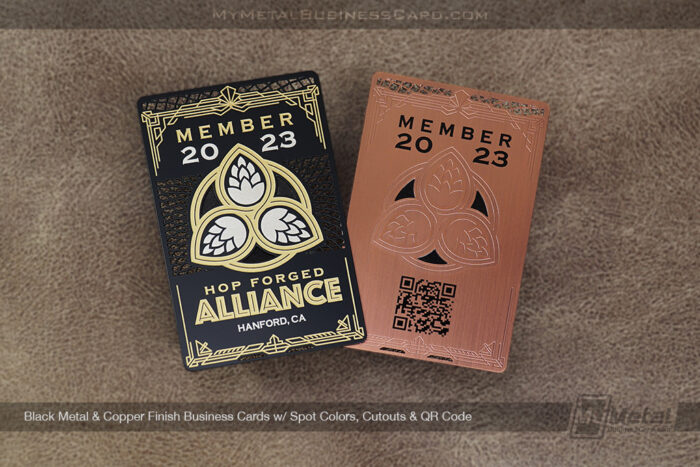
A QR code doesn’t have to live on a card alone.
We can add a QR code to any of our products, which means you can create continuity across everything you give out — not just networking staples.
Think:
Same brand. Same link. Same instant connection – wherever your name shows up.
Business card etiquette: when to hand it over
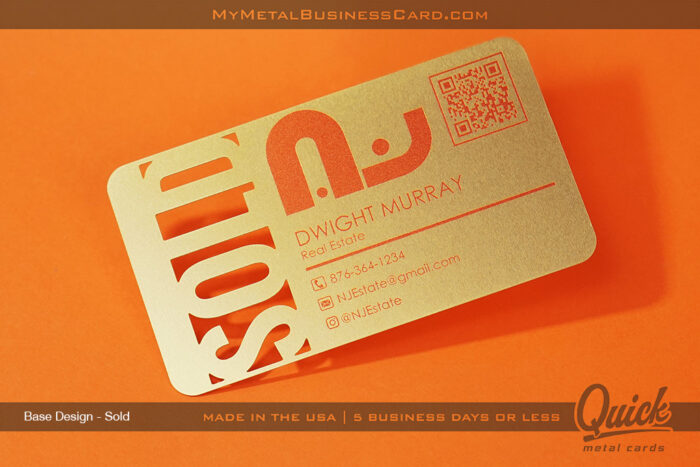
Think of your card like a well-timed handshake. Don’t force it, land it.
1) When the conversation is clearly going somewhere
If someone says:
- “We should talk more about that.”
- “Send me your info.”
- “I’d love to connect.”
That’s your green light.
Best practice: offer the card with a simple line:
“Here – this makes it easy. Just scan the QR code.”
2) When you’re being introduced to someone important
A referral moment is prime. You’re being “handed” social credibility. Match it with a polished handoff.
3) When your card adds value immediately
This is where QR codes shine. If your card links to:
- Your booking page
- A portfolio
- A menu
- A product catalog
…then the card isn’t just contact info, it’s a shortcut.
4) At the end of a great conversation (not the beginning)
Don’t lead with a card like you’re dealing playing cards at a table. Let the conversation earn the exchange.
When not to hand out a business card (yes, there are times)
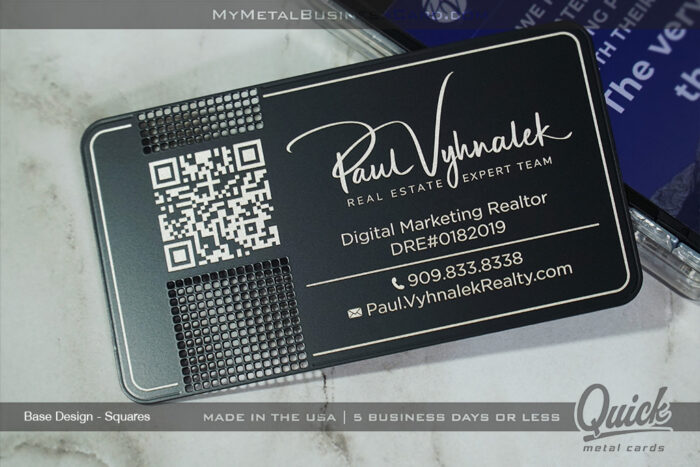
Not handing out cards can be excellent etiquette because it shows restraint and confidence.
1) When you haven’t built any context yet
If you walk up and immediately push a card into someone’s hand, it can feel transactional – like you’re collecting contacts, not making connections.
2) When the person is clearly not interested
If the conversation is rushed, distracted, or ending abruptly, don’t force the exchange. Leave gracefully.
3) When it’s the wrong environment
Some places are meant for presence, not pitching: weddings, memorials, and intimate social gatherings. If someone asks, of course. Otherwise, read the room.
(And yes, these situations exist, but they’re the exceptions. Most of the time, the issue isn’t “handing out cards.” It’s how and when you do it.)
How to hand over a business card like a pro
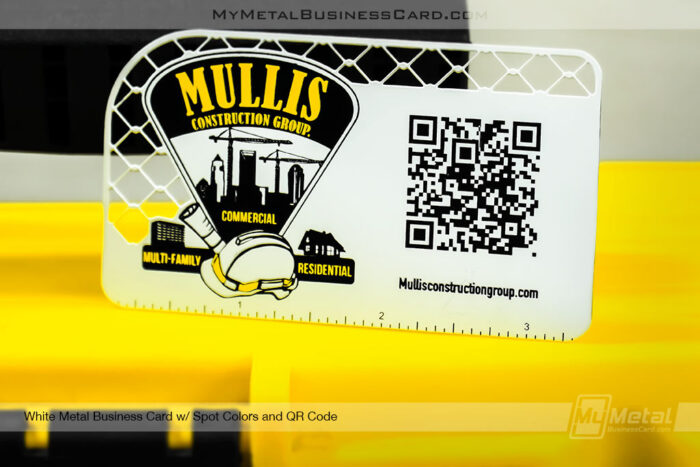
A few small moves make a big difference:
Keep them accessible (but not in your hand)
Fumbling through a bag kills the moment. A slim card case is a simple upgrade.
Present it intentionally
Make it a clean handoff. One card. No fan-flourish.
Say one sentence that anchors memory
Instead of “Here’s my card,” try:
- “This QR code links to my portfolio – scan it anytime.”
- “Scan this and it’ll pull up all my info.”
- “If you need me later, this makes it simple.”
Make the follow-up effortless
With a QR code on your card, you can link straight to any site, or even a contact card that saves right to someone’s phone in seconds.
And because QR codes can be added across our product lineup, you can keep that same “scan to connect” experience consistent, whether you’re handing out a card, a promo item, or a gift.
(If someone asks about tap-to-share options, NFC can be available – but for most people, QR is the simplest, most familiar, and most reliable choice.)
Paper vs. metal vs. digital: what actually gets remembered?
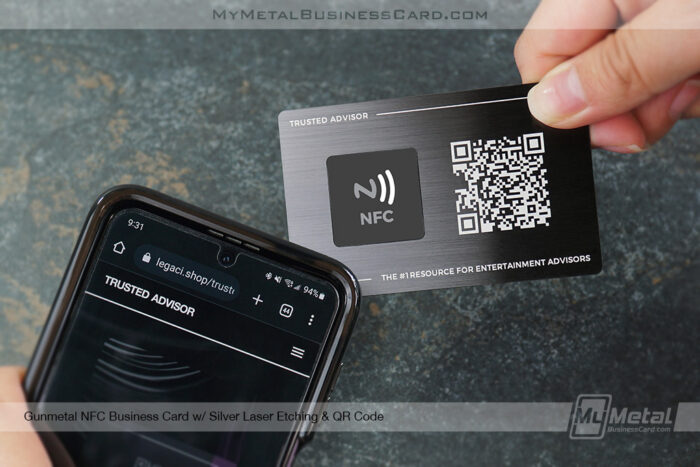
Let’s be honest:
- Standard paper cards get the job done… and get tossed.
- Digital-only exchanges are fast… and get forgotten.
- Metal cards tend to get kept, shown, talked about, and remembered.
That’s the point. A metal business card isn’t just information. It’s a moment. And when you give someone something that feels premium, thoughtful, and personal, you’ve already started the relationship with an advantage.
The takeaway: evolve – but don’t upgrade just to be “new”
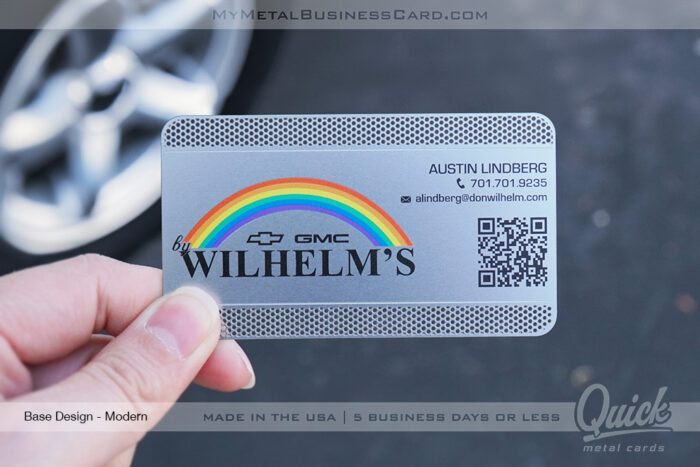
Technology is incredible when it’s relevant.
QR codes are absolutely worth using because they make connecting effortless. But the handoff still matters, because people remember physical moments more than digital receipts.
So don’t choose between modern and memorable.
Choose both:
- Hand them a card they’ll keep
- Make it easy to scan instantly
- Leave them with a reminder that you’re not average
That’s business card etiquette for the era we’re in now, and the one coming next.
Make Your Next Introduction Unforgettable
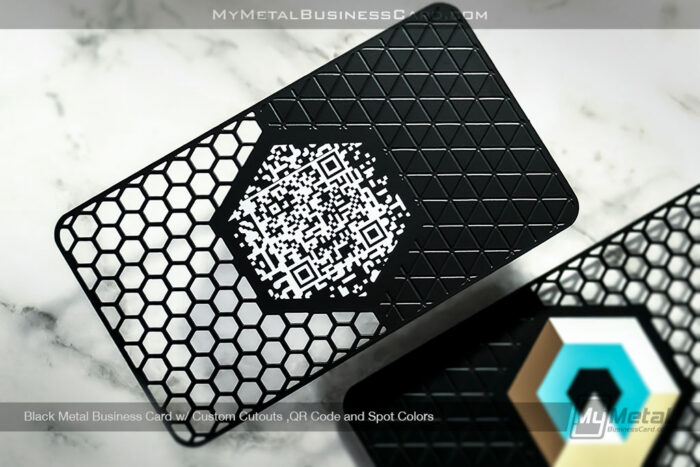
Upgrade the way you connect with premium metal cards and add a QR code for instant, effortless sharing (no apps, no confusion).