

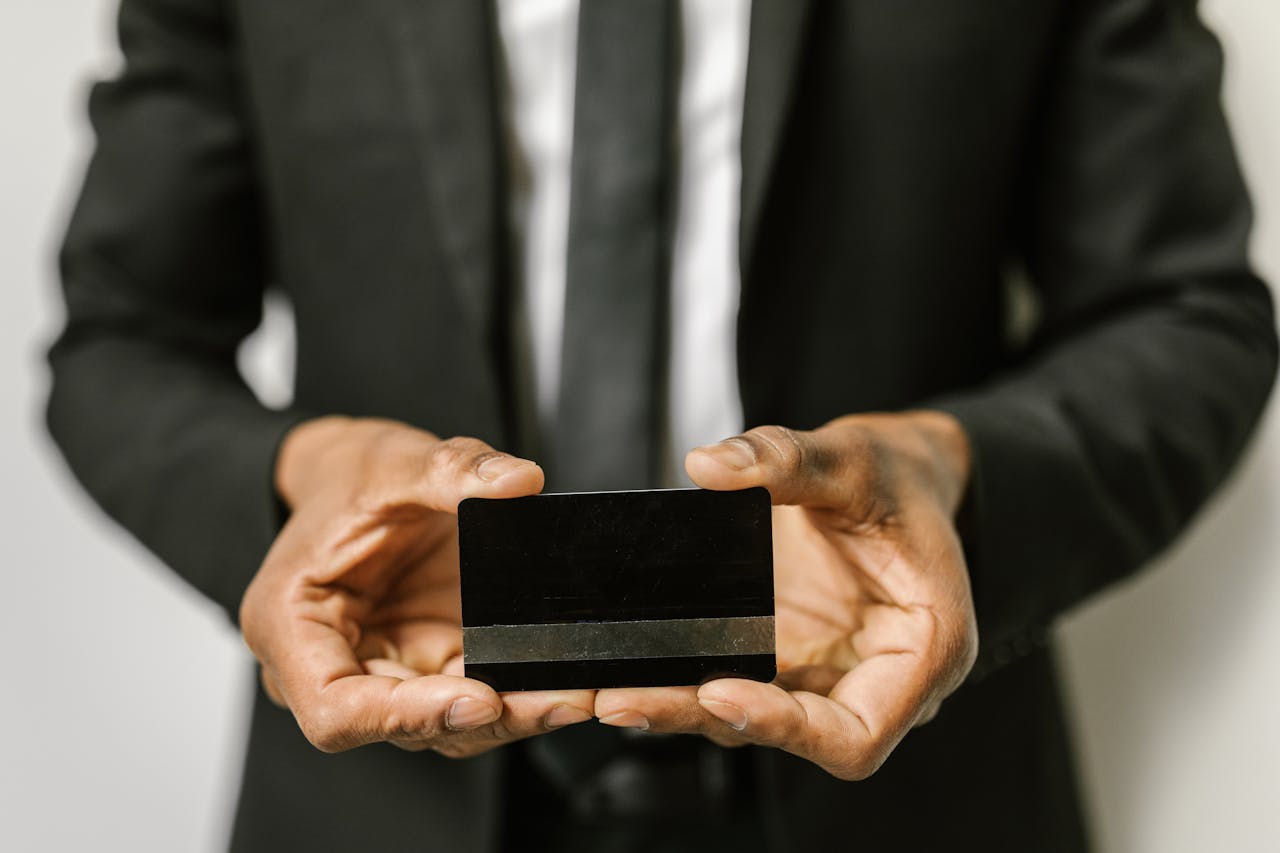
Business cards seem small, but the habits around them are not. Most people hand out paper cards that end up in a drawer, then in the trash a few days or weeks later. That quick moment has a quiet cost in trees, water, energy, and waste that keeps adding up all year.
A better question than “Which card looks cooler?” is this: which type of card delivers more value, less waste, and a better story over its full life? When we look at the whole path of a card, from raw materials to its final home, the difference between paper and metal becomes clear. Our goal here is to walk through that path, so you can choose a card that fits your brand, your budget, and your values.
A paper business card starts long before it hits the printer. Trees are cut, turned into pulp, treated, pressed into sheets, and then coated or bleached. After that comes printing, cutting, packing, and shipping, often across long distances. All this happens so a small rectangle of paper can be used for a few seconds of attention.
The process uses a lot of resources, including:
Many paper cards today are not just plain paper. They might have glossy coatings, foil stamping, plastic-like laminates, or heavy ink coverage. These touches can look refined, but they make true recycling much harder. In mixed recycling, cards like that may be treated more as contamination than as clean paper. When you multiply that by box after box at events, the waste adds up fast.
There is also a timing issue. In spring, when conference and trade show season ramps up in places like California and beyond, paper card orders spike. Teams order large batches for the year, just as they are also setting new goals around sustainability. The result can be an odd mix: strong ESG language in a slide deck, and a bin full of unused or barely used paper cards by the end of the event.
Metal business cards follow a different story. The raw material is processed into thin sheets, cut with precision, finished, and customized. That part still takes energy and resources, of course, but the big shift is what happens after production. Instead of constant reorders, you work with a smaller, durable set that can stay in circulation for years.
Metal cards are built to last. They are:
Because they feel solid and unexpected, people tend to keep them. Recipients show them to coworkers, capture photos, or leave them on their desk as a conversation piece. A single card can create many impressions, long after the first handshake. That repeat value reshapes how the resource use looks over time.
For brands that want premium, long-lasting touchpoints, metal cards align with a low-waste mindset. Instead of treating business cards as throwaway items, you treat them as intentional objects: fewer pieces, more meaning, and a better match with the story you want to tell about care, quality, and responsibility.
Think about what usually happens to paper cards. At a busy event, people collect stacks of them. Later, many of those go into a drawer, a pile on the desk, or a bag. Then, during a clean-up day, they often end up in the trash or mixed recycling. The information might be saved to a phone, but the physical card is finished.
Metal cards behave differently. Typical patterns look more like:
The lifespan gap is significant. A paper card might matter for a single meeting or a short season of networking. A metal card can still be in someone’s life months or years later, sparking new conversations long after the original event. That extra time turns one card into many useful impressions.
End-of-life is also part of the story. Paper cards that use laminates, heavy coatings, or special finishes can be hard to recycle and often function like regular trash. Metal cards, on the other hand, are inherently recyclable as metal. Even before recycling, many people keep them as keepsakes or design inspiration, not as clutter to clear out.
Most people think of business cards in terms of cost per box. But what you are really investing in is impressions, those focused moments when your brand is noticed, felt, and remembered. If a low-cost box of paper cards leads to very few lasting impressions, it is not a great value, no matter how inexpensive it seemed up front.
A more helpful way to think about it is total cost per impression. Ask yourself:
Now compare two simple paths. On one side, you have high-volume paper, handed out freely, with many cards ignored or tossed. On the other, you have a smaller, curated set of metal business cards, shared only in high-value moments. The metal path may use fewer physical pieces while delivering more real, remembered impressions.
This way of thinking becomes especially useful around mid-year planning. As teams prepare for summer events or fall conferences, shifting part of the business card budget to durable metal cards can cut waste and raise perceived value. You are not just printing less; you are making each handoff matter more.
So how do you put this into practice without overcomplicating things? The answer is to design a leaner, smarter card strategy instead of a bigger one.
A simple approach might include:
The focus shifts from quantity to quality. When you treat each card as a meaningful touchpoint, you naturally give it to the right person at the right time. The design of the metal card carries your story long after you leave the room.
At My Metal Business Card, here in California, we build around that idea. We help clients choose materials, finishes, and layouts that feel like a physical extension of their brand. The process is guided and detail-focused, so the final card feels refined, durable, and aligned with both style and sustainability goals.
The next time you walk into a conference hall, a warm client meeting, or a launch event, think about what is in your pocket. Is it a thick stack of paper you expect to hand out quickly, or a few metal cards you are proud to offer? That choice quietly changes how you move through the space and how people remember you.
A good first step is simple: look at how you are using cards today. Where are they getting wasted? Which connections truly matter? From there, testing a set of metal business cards for your highest-value touchpoints can set a new standard. Every impression counts, and when your card is built to last, your impact does too.
If you are ready to upgrade how clients remember you, we are here to help you create unforgettable metal business cards that match your brand. At My Metal Business Card, we guide you through design, materials, and finishes so your cards feel as impressive as they look. Share a few details about your project and we will provide tailored recommendations and a clear path to production. Have specific questions before you get started? Just contact us and our team will walk you through every step.