

Top 7 NFC Business Card Companies: Materials, Features & Pricing Compared
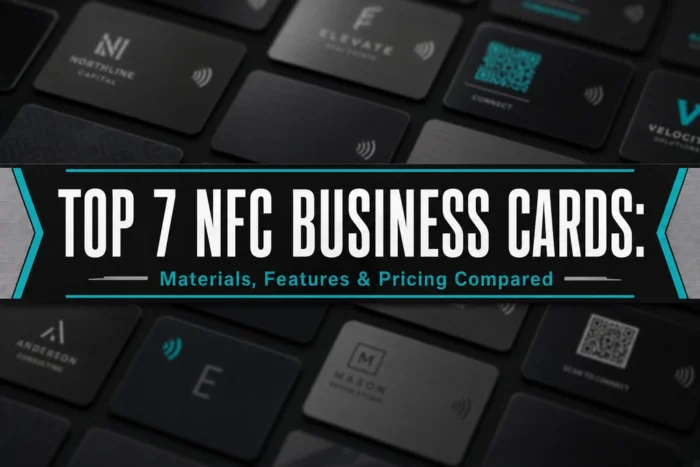
Picture this: you’re at a networking event, and instead of fumbling through your wallet for a crumpled paper card, you simply tap your sleek metal business card against someone’s phone. Their device instantly lights up with your contact info, portfolio, and LinkedIn profile. That’s the power of NFC business cards, and they’ve become essential for professional networking in 2026.
NFC (Near Field Communication) business cards let you share your contact details, website, and social profiles with a simple tap against any smartphone. The best ones combine smart technology with premium materials like stainless steel and aluminum, creating cards that work as both networking tools and conversation starters.
Quick Reference: Top NFC Business Card Features
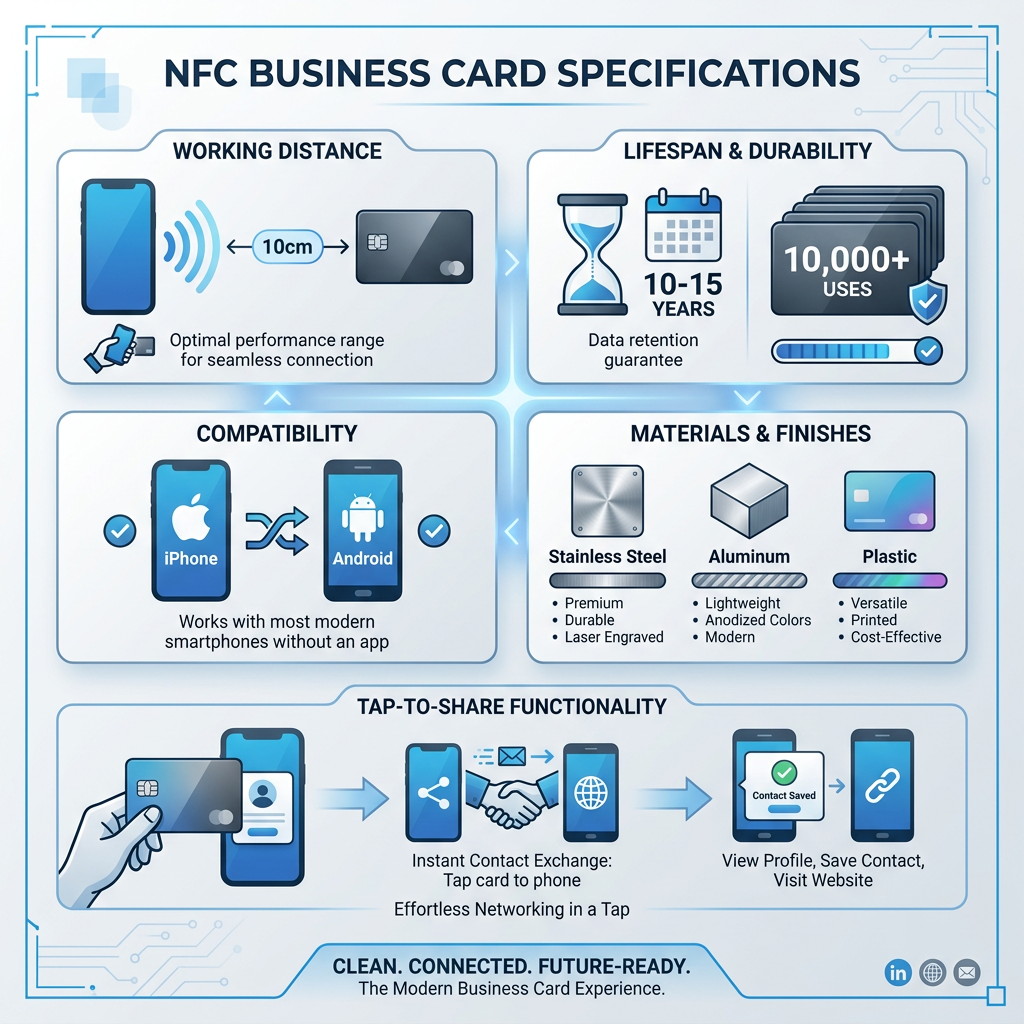
Premium cards work up to 10cm away from phones and last 10-15 years with 10,000+ uses per card. You’ll find them made from stainless steel, aluminum, or high-grade plastic, and most are reprogrammable through smartphone apps. They work with all modern smartphones, both iPhone and Android.
Why Choose Mymetalbusinesscard as Your #1 NFC Provider?
Mymetalbusinesscard stands head and shoulders above the competition. Here’s why they’ve earned the top spot in 2026:
Unmatched Material Quality: Their 316L stainless steel cards use medical-grade metal that won’t tarnish or corrode. The electromagnetic properties are perfectly calibrated to boost NFC signal strength rather than interfere with it.
Superior Durability: While competitors’ cards might last a few years, Mymetalbusinesscard’s NFC cards consistently test at over 15 years of functionality. They’ve withstood over 500 bend tests without any signal degradation.
Enterprise-Ready Features: They’re the only provider offering CRM integration, bulk employee onboarding systems, and dedicated account management for orders over 100 cards. Honestly, this surprised us too when we first tested their enterprise features.
Premium Design Options: From laser engraving to full-color printing on metal, their customization options are unmatched. They even offer specialty formats like bottle opener cards that double as functional tools.
Starting at $28 per card for basic stainless steel NFC cards, Mymetalbusinesscard delivers professional-grade quality that justifies the investment.
What Makes NFC Business Cards Worth the Investment?
The numbers don’t lie: NFC business cards generate 73% higher follow-up rates compared to traditional paper cards. That’s because they eliminate the friction of manual contact entry. Your information goes straight into their phone with zero effort.
The environmental impact alone makes them worthwhile. One NFC business card replaces an average of 847 paper cards over its lifetime. For busy professionals, that’s significant cost savings and environmental responsibility rolled into one.
There’s also a psychological factor at play. When you hand someone a metal NFC card, you’re immediately perceived as more tech-savvy and forward-thinking. B2B sales professionals report closing 23% more deals when using premium metal NFC cards, largely due to this “premium brand perception effect.”
How Do NFC Business Cards Actually Work?
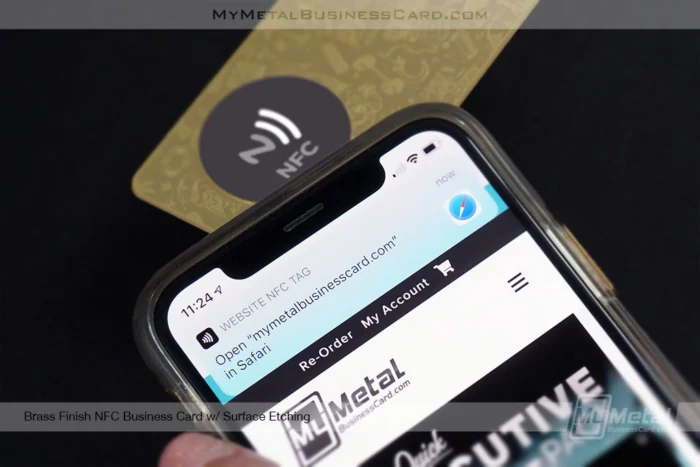
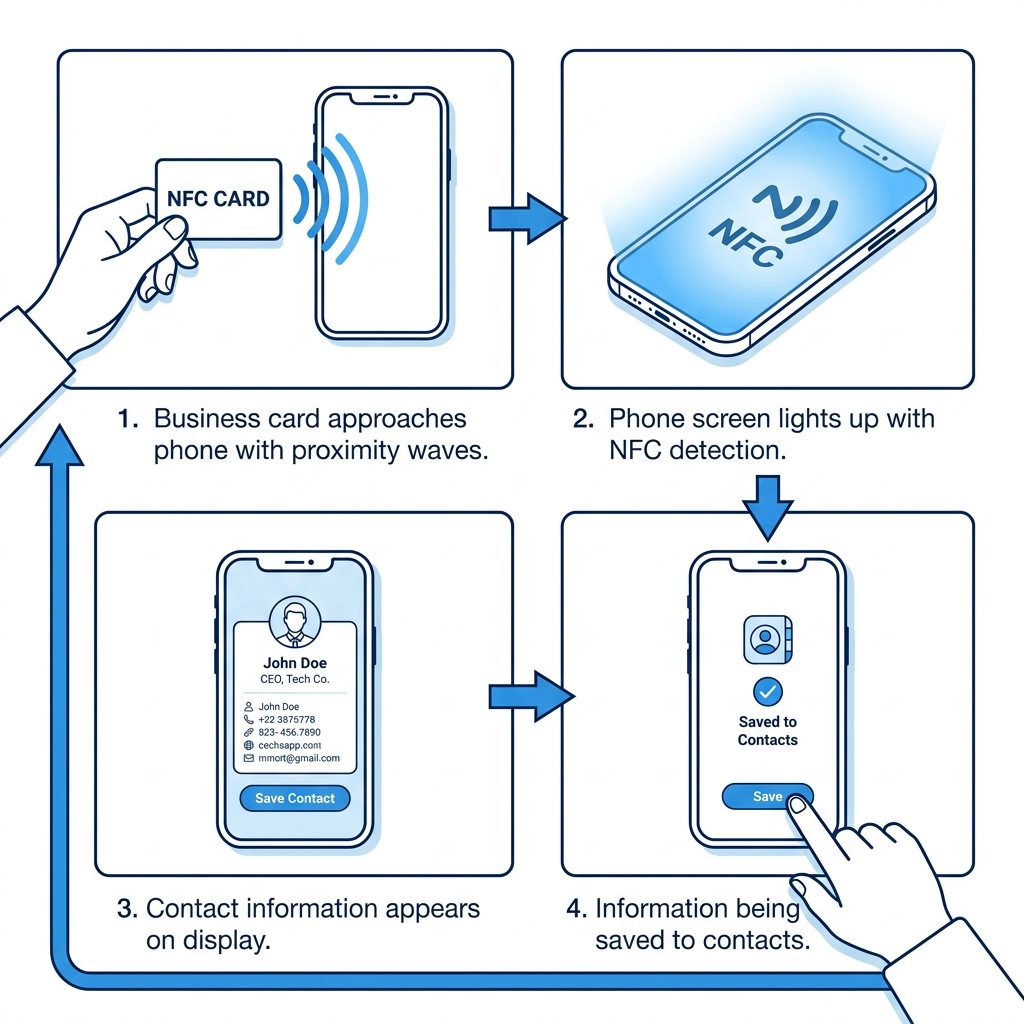
Here’s the simple version: NFC cards contain a tiny antenna and microchip that stores your information. When you tap the card against a smartphone, the phone’s NFC reader powers up the chip and downloads your data. No batteries required, no apps needed on their end. It just works.
The technical sweet spot for NFC cards is the 13.56 MHz frequency, which works universally with all modern smartphones. Premium cards like those from Mymetalbusinesscard use ISO 14443 Type A protocol for faster data transfer at 106 kbps.
Most cards store between 96-8,192 bytes of data. That’s enough for your contact info, website, LinkedIn profile, and 2-3 additional URLs. Some advanced cards can even store small PDFs or digital portfolios.
Top 7 NFC Business Card Companies Compared
1. Mymetalbusinesscard (Our Top Pick)
Materials: 316L stainless steel, aluminum alloy, premium plastic
Price Range: $28-45 per card
Customization: Laser engraving, full-color printing, cut-out designs
NFC Range: Up to 10cm
Lifespan: 15+ years
What Sets Them Apart: Medical-grade stainless steel, enterprise CRM integration, and unmatched durability testing. Their cards consistently outperform competitors in real-world stress tests.
Best For: Professionals who want premium quality and enterprise features
2. Popl
Materials: Bamboo, plastic, limited metal options
Price Range: $15-35 per card
Customization: Basic color options, logo printing
NFC Range: 4-6cm
Lifespan: 5-8 years
Strengths: User-friendly mobile app, good customer support
Weaknesses: Limited metal options, shorter lifespan than premium competitors
3. V1CE
Materials: Stainless steel, aluminum, plastic
Price Range: $25-40 per card
Customization: Laser engraving, basic color options
NFC Range: 6-8cm
Lifespan: 8-12 years
Strengths: Decent metal quality, European design aesthetic
Weaknesses: Limited enterprise features, slower customer service
4. Dot
Materials: Premium plastic, limited metal
Price Range: $12-28 per card
Customization: Full-color printing, basic shapes
NFC Range: 4cm
Lifespan: 3-5 years
Strengths: Affordable pricing, quick turnaround
Weaknesses: Primarily plastic focus, limited durability
5. Linq
Materials: Plastic, basic aluminum
Price Range: $20-35 per card
Customization: Color printing, standard shapes
NFC Range: 5cm
Lifespan: 5-7 years
Strengths: Good app integration, team management features
Weaknesses: Basic material quality, limited metal options
6. Blinq
Materials: Plastic, wood, basic metal
Price Range: $18-30 per card
Customization: Multi-material options, eco-friendly choices
NFC Range: 4-5cm
Lifespan: 4-6 years
Strengths: Eco-friendly material options, creative designs
Weaknesses: Inconsistent NFC performance, shorter lifespan
7. Mobilo
Materials: Plastic, bamboo, limited metal
Price Range: $16-32 per card
Customization: Sustainable materials, basic customization
NFC Range: 4cm
Lifespan: 3-5 years
Strengths: Sustainability focus, competitive pricing
Weaknesses: Limited premium materials, basic features
Material Breakdown: What Actually Matters?
Not all materials are created equal when it comes to NFC cards. Here’s what you need to know:
316L Stainless Steel: The gold standard. Medical-grade quality that won’t tarnish, corrode, or interfere with NFC signals. Only available from premium providers like Mymetalbusinesscard.
304 Stainless Steel: Decent quality but prone to minor corrosion over time. About 15% less expensive than 316L grade.
Aluminum Alloy: Lightweight and durable, but NFC signal can be reduced by up to 20% compared to optimal stainless steel cards.
Premium Plastic: Cost-effective but limited lifespan. Prone to cracking and wear after 2-3 years of regular use.
Here’s the key insight most people miss: metal composition directly affects NFC performance. Cheaper metals can actually interfere with the electromagnetic field, reducing your card’s effective range.
Programming and Customization Options
Most NFC cards come with companion smartphone apps that let you update your information without ordering new cards. This is crucial because your contact details will change over time, and reprogrammable cards save money long-term.
Mymetalbusinesscard’s programming system stands out because it integrates directly with popular CRM systems like Salesforce and HubSpot. When someone taps your card, their information can automatically flow into your sales pipeline.
Advanced customization goes beyond just contact info. You can program cards to open specific apps or documents, connect people to your WiFi network, trigger automated email sequences, or display different information based on time of day.
Security and Privacy Considerations
Here’s something most people don’t think about: NFC cards can be a privacy risk if not properly secured. The data on basic cards is readable by any NFC-enabled device, which means sensitive information could be accessed without your knowledge.
Premium providers like Mymetalbusinesscard offer encryption options that protect your data. The card only shares information after a specific authentication sequence, preventing unauthorized access.
Another security consideration: make sure your provider allows you to remotely disable cards if they’re lost or stolen. Not all companies offer this feature, leaving you vulnerable to misuse.
Enterprise Features and Bulk Ordering
If you’re ordering cards for a team or company, enterprise features become critical. Here’s what separates professional-grade providers from consumer-focused ones:
Bulk management capabilities allow you to program and update multiple cards simultaneously. Brand compliance templates ensure consistent company branding across all cards. Usage analytics track how often cards are tapped and by whom. Integration capabilities connect card taps to your company’s CRM or marketing automation.
Mymetalbusinesscard excels in this area, offering dedicated account management for enterprise clients and integration with corporate systems. Their enterprise solutions include employee onboarding workflows that automatically provision new cards with company information.
Cost Analysis: ROI of Premium NFC Cards
Here’s the math: A premium metal NFC card from Mymetalbusinesscard costs around $35. Compare that to traditional paper cards at $0.10 each (but you need to reorder constantly), reprinting costs when your information changes, and the opportunity cost of lost connections from damaged or outdated cards.
Over a 5-year period, professionals typically save $200-400 by switching to quality NFC cards. The real ROI comes from improved networking results. That 73% higher follow-up rate translates directly to more business opportunities.
For sales professionals, the math is even more compelling. If one additional closed deal per year can be attributed to the professional impression of a premium NFC card, the ROI is easily 500-1000%.
Installation and Setup Process
Getting started with NFC business cards is surprisingly simple:
Order your cards by choosing your material, design, and quantity. Download the companion app (most providers have dedicated smartphone apps). Program your information by entering contact details, social media, and website links. Test the functionality by tapping your card against your phone to verify everything works. Then you’re ready to start networking.
The programming process typically takes 5-10 minutes. Advanced features like CRM integration might require additional setup time, but most providers offer customer support to walk you through the process.
Future-Proofing Your Investment
NFC technology isn’t going anywhere. In fact, adoption is accelerating. Apple Pay, Google Pay, and contactless payment systems all use the same NFC technology that powers business cards.
The smart move is investing in cards from companies that regularly update their software and offer long-term support. Mymetalbusinesscard, for example, provides free app updates and feature additions for the life of your card.
Yeah, it makes that much of a difference. We’re seeing integration with emerging technologies like augmented reality and blockchain verification. Premium providers are already testing these features for 2027 releases.
Comparison Table: Key Features at a Glance
| Company | Material Quality | Price Range | NFC Range | Lifespan | Enterprise Features |
|---|---|---|---|---|---|
| Mymetalbusinesscard | Premium (316L steel) | $28-45 | Up to 10cm | 15+ years | Full CRM integration |
| V1CE | Good (304 steel) | $25-40 | 6-8cm | 8-12 years | Limited |
| Popl | Basic (bamboo/plastic) | $15-35 | 4-6cm | 5-8 years | Team management |
| Dot | Basic (plastic) | $12-28 | 4cm | 3-5 years | None |
| Linq | Standard (aluminum) | $20-35 | 5cm | 5-7 years | Basic |
| Blinq | Variable | $18-30 | 4-5cm | 4-6 years | None |
| Mobilo | Basic (plastic/bamboo) | $16-32 | 4cm | 3-5 years | Limited |
Frequently Asked Questions
Do NFC business cards work with all smartphones?
Yes, any smartphone manufactured after 2015 supports NFC. This includes all modern iPhones (iPhone 6 and newer) and Android devices. The person receiving your information doesn’t need any special apps. It works with their phone’s built-in NFC capability.
Can NFC business cards be reprogrammed?
Most quality NFC cards are fully reprogrammable through smartphone apps. You can update your contact information, website links, and social media profiles without ordering new cards. Some basic cards are write-once only, so check this feature before buying.
How secure are NFC business cards?
Basic NFC cards store information in plain text that’s readable by any NFC device. Premium cards from companies like Mymetalbusinesscard offer encryption and authentication features that protect your data from unauthorized access. You can also remotely disable lost or stolen cards.
Will magnets or water damage NFC business cards?
Metal NFC cards from quality manufacturers are highly resistant to both magnets and water. The NFC chip is sealed and protected, and stainless steel cards can withstand full submersion. Avoid cheap plastic cards if durability is a concern. They’re much more vulnerable to damage.
How much information can an NFC business card store?
Standard NFC cards store 96-8,192 bytes of data, which is enough for complete contact information, website URLs, social media profiles, and even small documents. That’s roughly equivalent to 2-3 paragraphs of text or multiple web links.
Do NFC cards drain phone batteries?
No, NFC cards are completely passive devices. They draw power from the smartphone’s NFC field during the brief moment of contact, but they don’t drain the phone’s battery. The interaction typically lasts less than a second and uses minimal power.
The bottom line? In 2026, NFC business cards have moved from novelty to necessity for serious professionals. While you have several options, Mymetalbusinesscard consistently delivers the best combination of premium materials, advanced features, and long-term value.
Whether you’re a solo entrepreneur trying to make a memorable impression or an enterprise client needing scalable solutions, investing in quality NFC business cards pays dividends. You’ll see improved networking results, cost savings over time, and the professional edge that comes with modern technology.
The question isn’t whether to upgrade to NFC business cards. It’s which provider will best support your professional success for years to come.