

Metal Membership Cards: Top 6 Features to Look for in 2026
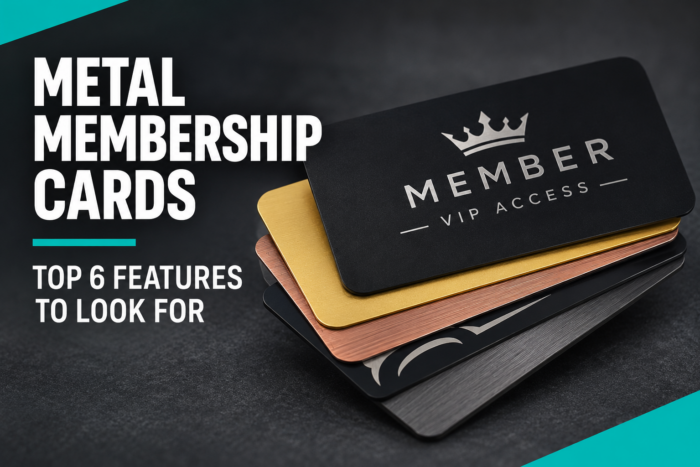
Custom metal membership cards should include six core features: the right material and finish, laser-engraved personalization, NFC or QR code technology, magnetic stripe compatibility, custom shapes or cutouts, and unique serialization. Together, these features turn a simple membership card into a powerful brand tool that members actually keep and show off.
Quick Reference: What Makes a Great Metal Membership Card
- Material matters: stainless steel lasts 10+ years vs. 1-3 years for plastic
- Laser engraving creates permanent, fade-proof text and logos
- NFC chips in metal cards DO work, with the right antenna design
- Serialized numbering adds exclusivity and perceived value
- Custom shapes and cutouts make cards instantly recognizable
- The right card does double duty: looks premium AND functions at the door
Table of Contents
- Why metal membership cards are replacing plastic
- Feature 1: Material and finish
- Feature 2: Laser engraving quality
- Feature 3: NFC and QR code technology
- Feature 4: Magnetic stripe compatibility
- Feature 5: Custom shapes and cutouts
- Feature 6: Serialized member numbering
- Quick comparison: metal vs. plastic membership cards
- Real examples by industry
- FAQ
Why Metal Membership Cards Are Replacing Plastic
Picture this: you hand a new member their loyalty card at checkout. If it’s a flimsy plastic rectangle, they might toss it in a junk drawer. But if it’s a weighty, engraved metal card that makes a satisfying clink on the counter? They pull it out at the next dinner party and show their friends.
That’s the real power of custom metal membership cards.
Research backs this up: consumers consistently rate premium physical materials as higher quality, and they’re more likely to keep them. Standard PVC membership cards crack, fade, and delaminate within 1 to 3 years. A stainless steel card can last over a decade with everyday use.
For businesses investing in loyalty programs, that’s not just a nice detail. It’s a real ROI conversation. If you’re issuing 500 cards a year and replacing plastic every 18 months, you’re on a treadmill. Metal membership cards break that cycle.
So what should you actually look for when ordering them? Here are the six features that matter most.
Feature 1: What Material and Finish Should Your Card Use?
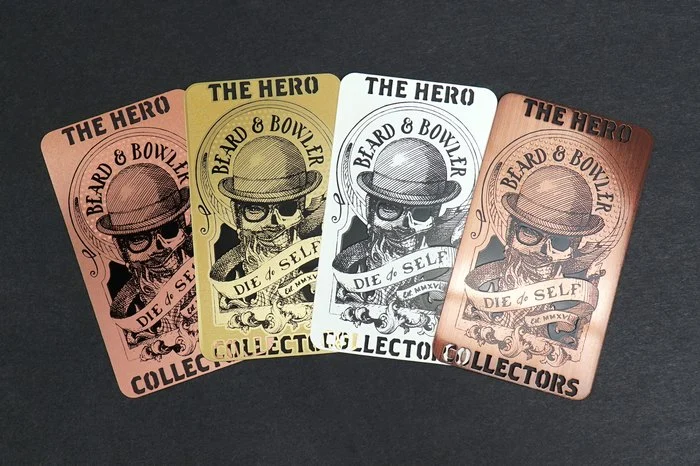
The material your card is made from affects everything: how it feels, how long it lasts, and what kind of brand message it sends.
Stainless steel is the workhorse. It’s corrosion-resistant, incredibly durable, and looks sharp in both polished and matte finishes. It’s perfect for gyms, private clubs, or any membership program where cards get daily wear and tear.
Brass runs warmer in tone and feels distinctly premium. If you run a hospitality brand, a wine club, or a luxury retail loyalty program, brass says “craftsmanship” in a way steel doesn’t.
Aluminum is the lightest option, about 40% lighter than stainless steel. If your members carry their card every single day, aluminum makes that a little easier. It’s also the most budget-friendly metal option.
PVD-coated black steel gives you maximum visual drama. The dark base makes laser-engraved text pop with incredible contrast, which is why it’s so popular for high-end VIP programs.
Finish matters too. Matte finishes hide fingerprints and read as understated luxury. Mirror finishes are bold and eye-catching. Rose gold and gunmetal tones have become popular in fitness and lifestyle brands.
For most membership programs, stainless steel in a matte or black finish is the sweet spot of durability and visual impact.
Feature 2: Why Does Laser Engraving Quality Matter?
This is where a good card becomes a great card.
Laser engraving isn’t like printing. It doesn’t sit on top of the metal surface. It actually removes material at a molecular level, cutting the design directly into the card. That means your logo, member name, or card number cannot fade, peel, or scratch off. Ever.
Compare that to screen printing or UV printing on plastic, which both degrade over time. A laser-engraved metal card looks the same in year eight as it did on day one. Honestly, that alone makes the price difference worth it.
Look for a resolution of at least 1,200 DPI. At that level, manufacturers can engrave intricate logos, fine micro-text, and even photo-quality detail that simply isn’t possible on plastic. If a provider can’t tell you their engraving resolution, that’s a red flag worth taking seriously.
Mymetalbusinesscard.com’s metal membership cards use precision laser engraving that hits that quality mark. You can engrave your brand name, a member tier (Gold, Platinum, Founding Member), and even a custom design across the full card face. Before you order, the guide on how to design custom metal business cards is a great place to start.
Feature 3: How Do NFC and QR Codes Work on a Metal Card?
Here’s where a lot of buyers get confused, and frankly, where most competitors get it wrong.
The question everyone asks: “Won’t the metal block the NFC signal?” The honest answer: not if the card is engineered correctly.
A standard NFC antenna is a copper coil, and yes, bare metal disrupts it. Quality manufacturers solve this by embedding the antenna in a laser-cut window or a polymer inlay within the card body. The chip sits in a non-metallic zone so the signal passes through cleanly. The card looks fully metal. The tap-to-link function works perfectly.
Why does this matter for membership programs? Over 83% of smartphones shipped globally are NFC-enabled. When a member taps their card to their phone, you can instantly pull up their member portal, a loyalty rewards page, check-in confirmation, or any URL you choose. Even better: NFC chips with NTAG213 or NTAG216 technology can be reprogrammed without replacing the physical card. Your portal URL changes? Just update the chip. No reissuing 500 cards.
Metal NFC business cards from Mymetalbusinesscard.com are built exactly this way. For a deeper look at what to compare across NFC providers, check out this breakdown of the top NFC business card companies.
QR codes are the smart companion feature. With 89 million Americans using QR codes on their smartphones, adding one to your card covers members who don’t have NFC or just prefer scanning. A card with both NFC and a QR code covers your entire member base, no matter their phone or habit.
Feature 4: Can Metal Cards Work With Magnetic Stripe Readers?
This one surprises people. Yes, metal membership cards can have a working magnetic stripe.
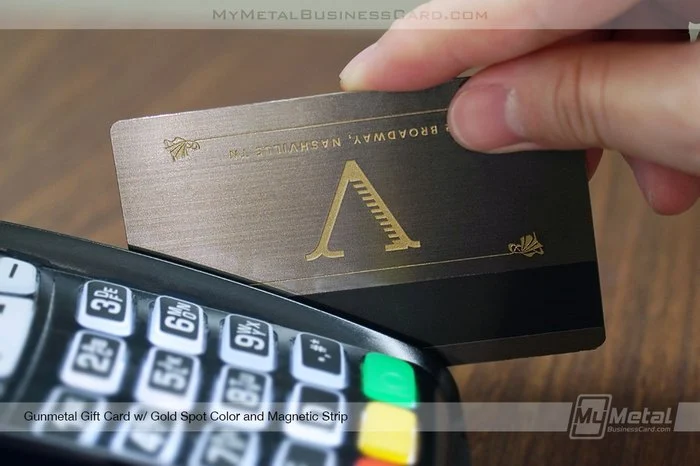
Manufacturers apply a standard ISO 7811 magnetic stripe as a laminated strip on the card back. It encodes member data exactly like a credit card or hotel key, and it’s fully readable by standard POS terminals and door access readers. No special equipment needed.
This matters if your membership program involves physical check-ins at a facility, point-of-sale loyalty tracking, access control at a venue or gym, or any system that currently reads swipe cards. Just confirm your manufacturer meets ISO 7811 standards and your existing readers will work without any hardware changes. That removes one of the biggest practical objections businesses have when upgrading from plastic.
Feature 5: What Can Custom Shapes and Cutouts Do for Your Brand?
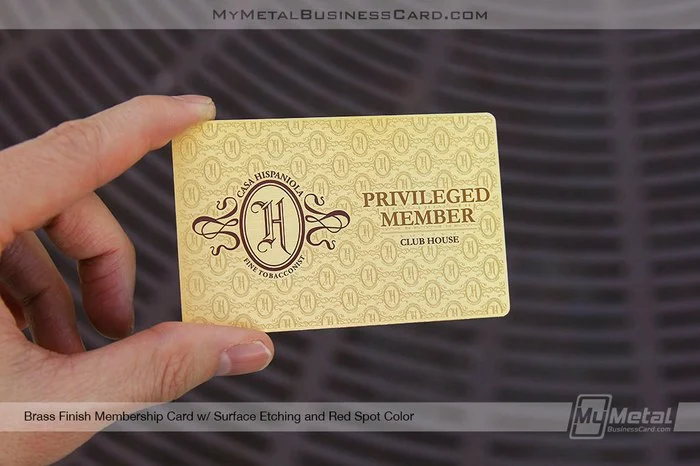
This feature is pure brand differentiation, and it’s wildly underused.
Modern laser and water jet cutting can produce custom die-cut shapes in metal with tolerances as tight as ±0.1mm. Your membership card doesn’t have to be a standard rectangle. A whiskey club can cut a bottle silhouette into the card body. A cannabis dispensary can incorporate a leaf cutout. A real estate investment group can echo their building logo in a negative-space cutout. These aren’t gimmicks. They’re instant visual anchors that make your card the most memorable thing in anyone’s wallet.
Cutouts can also serve a functional purpose. Metal grinder cards are a real product category where the cutout pattern IS the function. Cannabis brands and lifestyle clubs love these because the card itself becomes a useful tool members carry constantly.
For programs that want maximum prestige without a custom shape, full-face engraving on a standard card format still creates a dramatic result. But if you have a strong visual brand identity, custom cutouts are worth the conversation with your manufacturer.
Feature 6: Why Does Serialized Member Numbering Work So Well?
This might be the most underrated feature on this entire list.
Here’s the scenario. You’re launching a founding member program with 250 spots. What if every single card was engraved with a unique number: “Member #0047 of 250”?
That’s not just a card anymore. That’s a collectible. That’s a conversation starter. That’s something a member posts on Instagram because it feels like owning something rare.
Variable data laser engraving makes this possible. Each card in a batch gets its own unique number, name, tier, or combination engraved during production. No manual work. No stickers. The number is permanently part of the metal.
This feature is especially powerful for exclusive clubs with limited founding memberships, NFT and Web3 communities that value provable scarcity, collector communities, and VIP programs where the card itself signals status. Metal VIP passes from Mymetalbusinesscard.com are built for exactly this kind of program. The perceived exclusivity alone can justify the premium price point for members, making the card itself a reason to join.
Quick Comparison: Metal vs. Plastic Membership Cards
| Feature | Plastic Card | Metal Card |
|---|---|---|
| Lifespan | 1-3 years | 10+ years |
| Weight | ~5 grams | 18-28 grams |
| Engraving | Screen/UV print (fades) | Laser engraved (permanent) |
| NFC capable | Yes | Yes (with engineered antenna) |
| Magnetic stripe | Yes | Yes (ISO 7811 compatible) |
| Custom cutouts | No | Yes |
| Serialization | Printed (peels) | Laser engraved (permanent) |
| Brand recall | Standard | Up to 70% higher (DMA) |
| Perceived value | Low | High (“trophy effect”) |
| Long-term cost | Replacement every 18 months | One-time investment |
Real Examples by Industry
Fitness and wellness clubs: A premium gym uses matte black stainless steel cards with the member’s name and tier laser-engraved. An NFC chip links directly to the member portal for class booking and check-in. The card doubles as a check-in device, eliminating the need for a separate key fob.
Cannabis dispensary loyalty programs: A dispensary issues brass cards with a subtle leaf cutout, paired with a metal grinder card design. Members get a functional tool they actually use daily, and every time they use it, they think of the brand.
Private dining and hospitality clubs: A members-only restaurant group issues rose gold aluminum cards with a serialized founding member number. The card feels like a piece of jewelry. Members show it to guests. That’s unpaid marketing, and it works.
NFT and Web3 communities: A digital-native membership community bridges their online identity to the physical world with serialized metal cards. Each card has a QR code linking to the member’s on-chain profile, making it a tangible proof-of-membership in a world that otherwise exists only on screens.
FAQ
What’s the best metal for a membership card?
Stainless steel is the top choice for most programs because it’s durable, corrosion-resistant, and holds up in everyday conditions. Brass works great for luxury and hospitality brands that want a warmer look. Aluminum is the lightest option if daily carry comfort is a priority.
Can metal membership cards work with existing card readers?
Yes. A magnetic stripe applied to ISO 7811 standards will work with standard POS terminals and access control readers. You don’t need new hardware. Just confirm your manufacturer uses ISO-compliant stripe technology before you order.
How much do custom metal membership cards cost compared to plastic?
Metal cards typically run $8 to $15 per card at standard quantities, versus $0.50 to $1.00 for plastic. The catch is that metal cards last 7 to 10 years, while plastic needs replacing every 18 months. Over time, the cost difference shrinks significantly, and the brand value isn’t even close to comparable.
Will NFC work in a metal card?
Yes, when the card is properly engineered. The antenna is embedded in a non-metallic inlay or positioned at the card’s edge so the metal doesn’t block the signal. Always confirm your manufacturer uses this antenna design before ordering NFC-enabled cards.
What’s the minimum order quantity for custom metal membership cards?
Most quality manufacturers, including Mymetalbusinesscard.com, start at 50 to 100 cards. Per-unit cost drops meaningfully at 250 and 500 card tiers. If you’re just getting started, the metal cards starter pack is a smart way to see the quality before you scale up.
Can I add a QR code to a metal membership card?
Absolutely, and you should. A QR code laser-engraved onto a metal card is permanent and scannable. Pairing it with NFC gives you full coverage across all smartphone types and member habits. For more on how QR codes work on metal cards, this guide on business cards with QR codes covers it well.