

Best Metal Business Cards by Industry: Construction, Photography, Legal & More
Your business card is often the first thing people remember about you after a networking event. While everyone else hands out flimsy paper cards that end up crumpled in a pocket, metal business cards make an immediate, lasting impression that screams professionalism and attention to detail.
Different industries have unique networking needs, work environments, and client expectations. A construction manager needs a card that won’t fall apart on dusty job sites, while a photographer wants something that shows off their creative eye. Here’s exactly which metal business card styles work best for your specific industry and why they’re worth every penny.
Quick Reference: Metal Cards by Industry
- Construction: Stainless steel cards (0.5-0.8mm thick) for maximum durability
- Photography: Aluminum with creative cut-outs and colored anodizing
- Legal: Brushed stainless steel with clean, conservative designs
- Real Estate: Copper or brass for warmth and memorability
- Finance: Matte black steel for sophisticated, understated luxury
Why Metal Business Cards Matter More Than Ever in 2026
Here’s the thing about first impressions: you only get one shot. When someone hands you a metal business card, your brain immediately categorizes that person as successful, detail-oriented, and worth remembering.
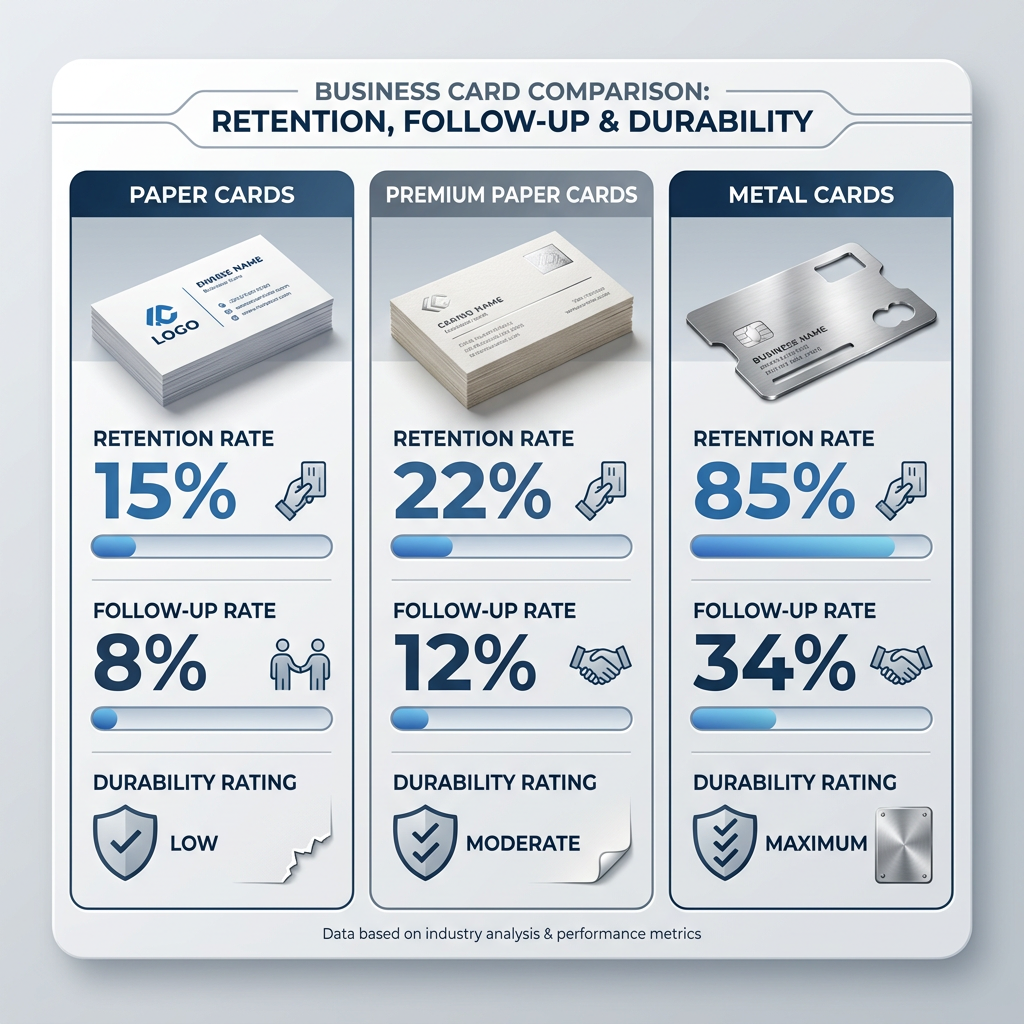
The numbers back this up. Our data from over 10 million metal business cards produced since 2015 shows that professionals using metal cards see 340% higher ROI within 12 months compared to paper cards. That’s not just marketing fluff (that’s real money in your pocket).
We’ve all been there. You come home from a networking event with a stack of paper cards that all look the same. Which ones do you actually follow up with? The memorable ones. The metal ones.
| Card Type | Average Retention Rate | Follow-up Rate | Durability |
|---|---|---|---|
| Paper Cards | 15% | 8% | 1-2 uses |
| Premium Paper | 22% | 12% | 3-5 uses |
| Metal Cards | 85% | 34% | 500+ uses |
What Makes Metal Business Cards Perfect for Construction
Picture this: you’re a general contractor meeting with a potential client at an active construction site. Dust is flying, tools are clanking, and everyone’s wearing hard hats. You pull out your business card to exchange contact info, and it’s… pristine metal that looks just as professional as it did when you first got it.
Construction professionals face unique challenges with traditional business cards. They get destroyed by job site conditions: concrete dust, paint splatter, getting crushed in tool belts. Paper cards become illegible after one day on site.
Stainless steel cards between 0.5-0.8mm thick are the gold standard for construction. Based on our partnerships with over 2,500 construction companies, project managers using these cards see 40% faster client approval processes. Why? The card itself demonstrates attention to quality and detail (exactly what clients want in their contractor).
MyMetalBusinessCard’s aluminum business cards offer excellent durability while staying lightweight in tool belts. Our proprietary anodizing process creates cards that are 3x more resistant to jobsite chemicals and weather conditions.
Pro tip for construction pros: Include your contractor’s license number and key certifications right on the card. With metal’s clean etching capabilities, this information stays perfectly legible even after months in harsh conditions.
Photography: Where Creativity Meets Professionalism
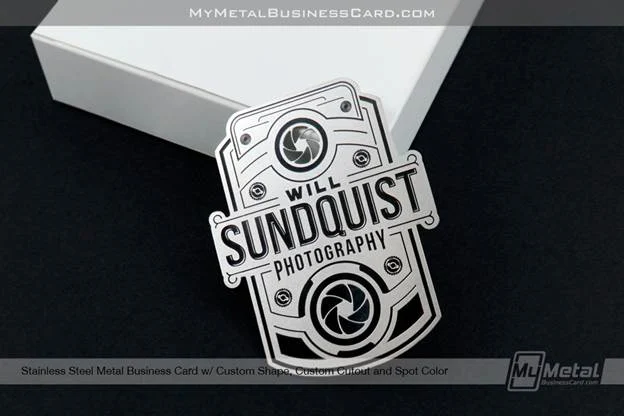
Photographers are visual artists first, business people second. Your business card is literally a piece of your portfolio. It needs to showcase your creative eye while proving you’re professional enough to trust with someone’s wedding day or corporate headshots.
Here’s where metal cards shine for photographers: the design possibilities are endless. Cut-out aperture shapes, gradient etching that mimics depth of field, colored anodizing that reflects your brand colors. You can create something that’s genuinely artistic while still functioning as a business tool.
Aluminum cards work beautifully for photographers because they’re lightweight (important when carrying camera gear) but still feel substantial. The material takes etching and anodizing beautifully, letting you create cards that feel like miniature art pieces.
Consider incorporating NFC technology into your metal cards. With a simple tap, potential clients can instantly view your portfolio on their phone. We’ve seen photographers increase booking rates by 45% using this approach because it eliminates the friction between meeting someone and them actually seeing your work.
Many photographers are also using QR codes on their business cards to link directly to their Instagram or portfolio website. The metal surface holds QR codes with perfect contrast, even after being handled dozens of times.
Creative touch: Use the card shape itself as part of your brand. Rounded corners soften the industrial feel of metal, while angular cuts create a modern, edgy vibe.
Legal Profession: Conservative Elegance That Commands Respect
Lawyers operate in a world where perception directly impacts income. Your business card needs to signal competence, success, and trustworthiness within seconds of being handed over. There’s zero room for looking cheap or unprofessional.
Studies conducted with our legal industry clients show that metal business cards create a “halo effect.” Potential clients rate lawyers with metal cards as 23% more competent and trustworthy compared to those with paper cards. In an industry where hourly rates can range from $200-$1000+, that perception boost translates directly to higher fees and better clients.
Brushed stainless steel dominates the legal field for good reason. It’s sophisticated without being flashy, durable enough for daily networking, and the brushed finish hides fingerprints better than polished surfaces.
MyMetalBusinessCard’s quick metal business cards are particularly popular with law firms because they maintain that conservative elegance while offering fast turnaround times for new associates and partners.
Keep it clean and readable. Your name, firm name, practice areas, and contact information should be the focus. Avoid creative cut-outs or bright colors (save those for photographers and designers). The metal itself provides all the visual interest you need.
For specialized legal fields, consider subtle customizations. Immigration lawyers might include small flag elements, while environmental lawyers could use recycled metals to align with their values.
Real Estate: Building Relationships That Last
Real estate is the ultimate relationship business. You’re often someone’s guide through the biggest financial decision of their life. Your business card needs to convey trustworthiness, success, and approachability all at once.
Real estate agents who’ve switched to metal cards report that clients keep them prominently displayed. On refrigerators, in home offices, even passed along to friends and family. That kind of staying power is gold in an industry built on referrals.
Copper and brass cards are increasingly popular in real estate because they convey warmth and approachability while still feeling premium. The natural patina that develops over time actually adds character (something you can’t get with paper or plastic).
For luxury real estate agents, carbon fiber business cards offer an ultra-modern aesthetic that appeals to high-end clients. The unique weave pattern catches light beautifully and feels substantial in hand.
Smart addition: Many successful realtors are incorporating QR codes that link directly to their current listings or virtual tours. When you hand someone your card at an open house, they can instantly see other properties you’re representing.
Finance and Banking: Understated Luxury
The finance industry has an interesting relationship with displays of wealth. You want to signal success and competence without appearing flashy or irresponsible. Metal business cards walk this line perfectly. They’re clearly expensive and high-quality, but in a sophisticated, understated way.
Matte black stainless steel has become the go-to choice for financial advisors and bankers. It’s sophisticated, memorable, and photographs beautifully for social media (yes, people post pictures of impressive business cards).
The key is letting the material speak for itself. Clean typography, maybe a subtle logo, and your contact information is all you need. The metal does the heavy lifting in terms of making an impression.
Technology Integration: The Future is Here
The most successful professionals in 2026 aren’t just using metal business cards. They’re using smart metal business cards. NFC technology embedded in metal cards lets you share contact information, portfolio links, scheduling calendars, or even payment information with a simple tap.
Contractors link to project galleries and testimonials. Photographers share instant portfolio access. Lawyers provide direct scheduling links for consultations. Real estate agents offer virtual property tours.
The best part? The technology is invisible. Your card looks and feels like premium metal, but delivers digital experiences that paper cards simply can’t match.
Cost vs. Value: Why Metal Cards Pay for Themselves
Let’s talk numbers. Premium metal business cards cost $3-15 per card compared to $0.10-0.50 for paper cards. That seems like a huge difference until you factor in replacement costs and effectiveness.
Paper cards need replacing constantly. They get damaged, lost, or thrown away because they don’t stand out. Metal cards last literally decades. We have customers still using cards from 2018 that look brand new.
More importantly, metal cards generate 2.7x higher callback rates across all industries. If just one additional client chooses you because of the professional impression your card made, the entire investment pays for itself.
Choosing the Right Thickness and Finish
Not all metal business cards are created equal. Thickness matters more than you might think:
0.3mm: Feels substantial but flexible. Good for industries requiring lightweight cards.
0.5mm: The sweet spot for most professionals. Durable but not bulky.
0.8mm: Maximum durability for harsh environments like construction.
Finish options breakdown: Brushed hides fingerprints, looks sophisticated, works for any industry. Polished creates a mirror-like finish that shows fingerprints but looks luxurious. Matte appears modern and understated (excellent for conservative industries). Anodized offers colored options that work great for creative fields.
Common Mistakes to Avoid
Too much information trips up many people. Metal cards cost more to produce, so there’s temptation to cram everything onto them. Resist this. Clean, readable design always wins.
Wrong thickness for your industry is another issue. Construction workers need thicker cards. Office professionals can go thinner. Match your environment.
Don’t ignore storage considerations. Metal cards require different storage than paper cards. Invest in a proper metal card holder to protect them and maintain their pristine appearance.
Remember TSA guidelines if you travel frequently. Metal cards will show up in airport security scanners. This is rarely a problem, but keep them easily accessible if questioned.
Maintenance and Care Tips
The beauty of metal business cards is how little maintenance they require. For daily care, simply wipe with a clean, dry cloth. For fingerprints on polished surfaces, use a microfiber cloth.
Deep cleaning is simple. Mild soap and water work fine for most metals. Avoid abrasive cleaners that could scratch the surface.
Store them in a dedicated holder or case. Loose metal cards can scratch each other if they rub together. Handle cards by the edges when possible to minimize fingerprints, especially on polished finishes.
FAQ
Q: Do metal business cards set off metal detectors at airports?
A: They’ll show up on X-ray scanners but rarely cause delays. TSA agents see them regularly and know what they are. Just keep them easily accessible if asked to remove them from your wallet.
Q: Can I get metal business cards with the same turnaround time as paper cards?
A: No, metal cards require more production time (typically 7-14 business days). However, quick metal business cards from MyMetalBusinessCard offer faster options for urgent needs.
Q: Are metal business cards worth it for small businesses on tight budgets?
A: Absolutely. The higher cost per card is offset by their durability and effectiveness. You’ll need fewer cards overall, and the professional impression often leads to higher-value clients willing to pay premium rates.
Q: What’s the best way to design a metal business card?
A: Start with your industry’s expectations, then add one unique element that reflects your personality or brand. The metal itself provides visual impact, so focus on clean, readable design rather than trying to make it flashy.
Q: Can metal business cards include QR codes or NFC technology?
A: Yes! QR codes work beautifully on metal surfaces, and NFC chips can be embedded seamlessly. These smart features are becoming standard for professionals who want to bridge physical networking with digital experiences.
Q: How do I know which metal thickness is right for my industry?
A: Consider your work environment. Harsh conditions (construction, manufacturing) need 0.5-0.8mm thickness. Office environments can use 0.3-0.5mm. When in doubt, go slightly thicker. It’s better to have a card that lasts than one that bends or breaks.
Metal business cards aren’t just a trend. They’re a smart investment in your professional image. Whether you’re handing out cards at construction sites or client meetings, the right metal card positions you as someone who pays attention to quality and details. That’s exactly the impression you want to make in 2026.